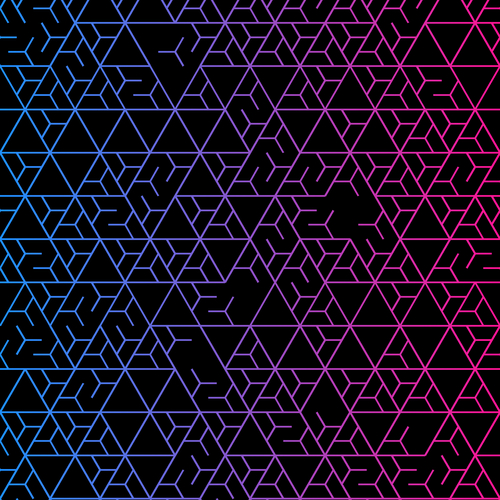
Sometime in early 2021, I became fascinated with the Japanese artform of Kumiko. Geometric patterns and natural wood grain are two of my favorite aesthetics, so kumiko is a perfect combination of style and medium for my tastes. I would love to have a panel someday, but like most high-skill artforms, genuine kumiko is quite expensive. I would also love to try actually making a panel, but I don’t see myself having access to the required space or equipment any time soon, much less the time that would be required to learn and practice all of the necessary skills. Nonetheless, I wanted to explore the artform, so I grabbed a pen and paper. Many, many hours later, I had a pretty cool kumiko-inspired piece.
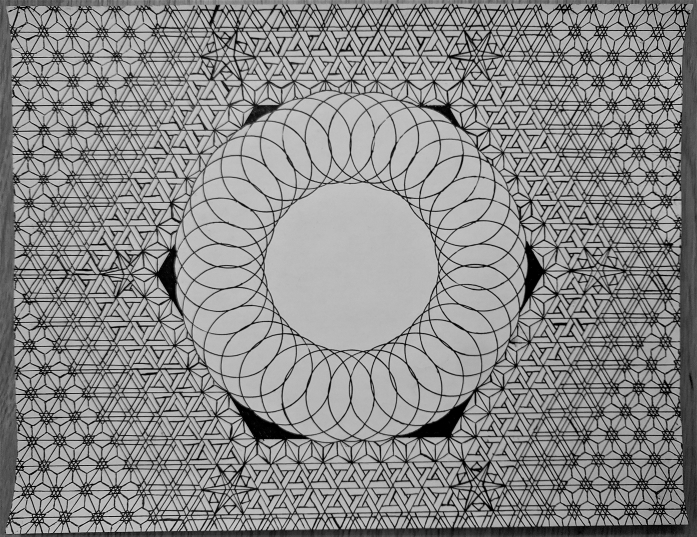
This was not my first attempt, nor my last, but it is the only attempt that was successful. On several other attempts I reached the stage where the basic triangle grid was nearly completed, but then made a mistake that ruined the entire thing. The outcome is highly sensitive to the alignment being perfect, so a minor difference in an angle can be enough to cause failure. After spending so much time only to have to start from scratch, this was incredibly frustrating and I eventually abandoned any further tries. Up to this point, I had been marking out measurements with a 6" ruler and using a folded piece of paper as a straightedge (since the ruler was too short for my page), so I invested in some drafting tools in hopes of minimizing the possibility for error. The tools certainly helped, but ultimately it was obvious that in order to be able to really explore my ideas in a time-efficient way, I would have to use a computer.
Around that time, the COVID pandemic reached the point that life slowly began to return to normal. It wasn’t until almost two years later that I picked the project back up. I had had the idea to just throw code at the problem, but I was worried about losing the expressive aspect that a more involved approach would have, so I wanted to rule out other options first. I spent some time playing around with the editing capabilities in GIMP, but I couldn’t see any possibility for the efficiency gains I needed using GIMP alone. Finally, I started writing some python, and within a week I had basically everything I needed to make an arbitrary number of highly-detailed kumiko-style images.
The development process went much more smoothly than I expected, considering that I jumped in with very little planning. It was also a lot of fun. Once I had the basics done, I ran some tests to get an idea of what the final product would look like. Rather than try to do anything specific, I wrote a quick function to assign patterns based on a random number.
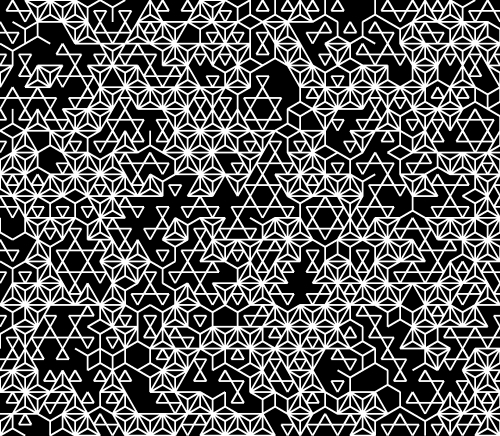
I thought this would be cool, but it was way more interesting than I expected. Later, I started adding color and more patterns.
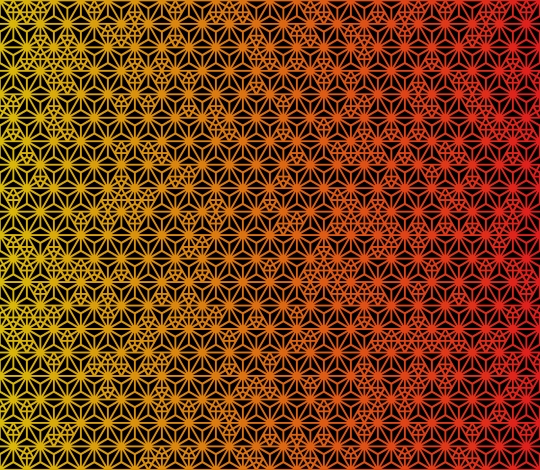
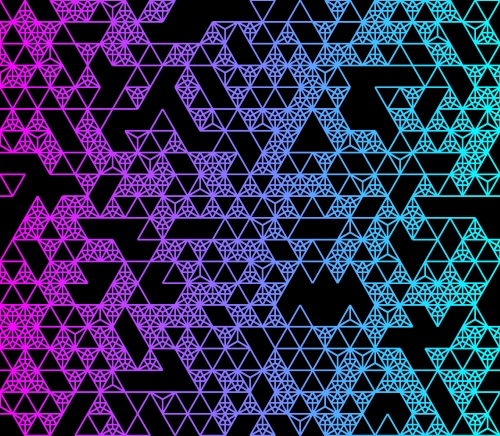
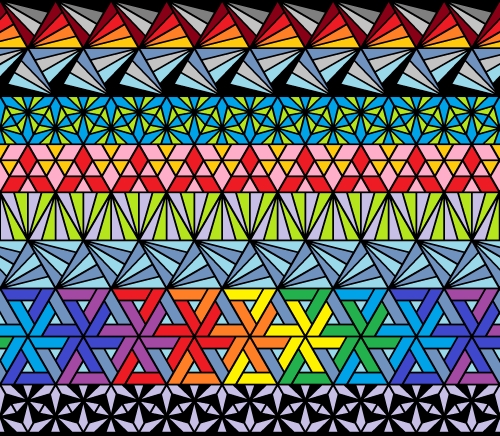
(This one is generated with random patterns per row of triangles, but manually filled in with Microsoft Paint)
I eventually tried randomizing the line colors as well.
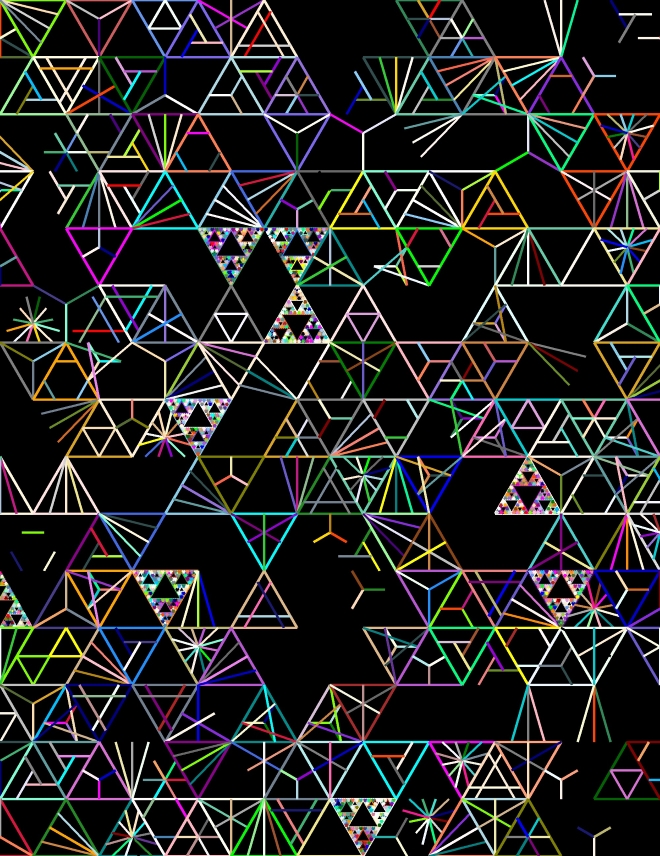
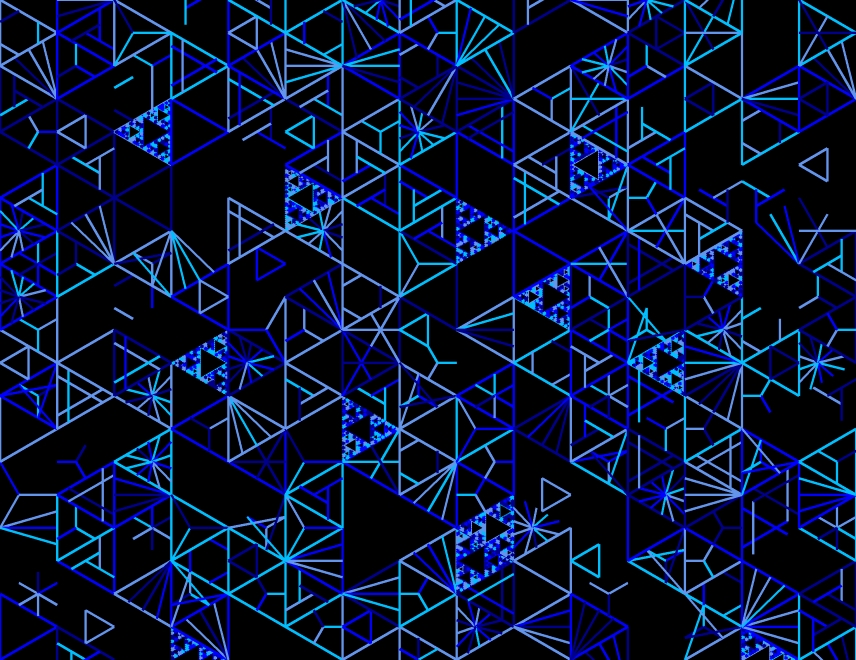
More recent experiments limit the number of patterns the randomizer can choose from, to try to get a balance between randomness and uniformity.
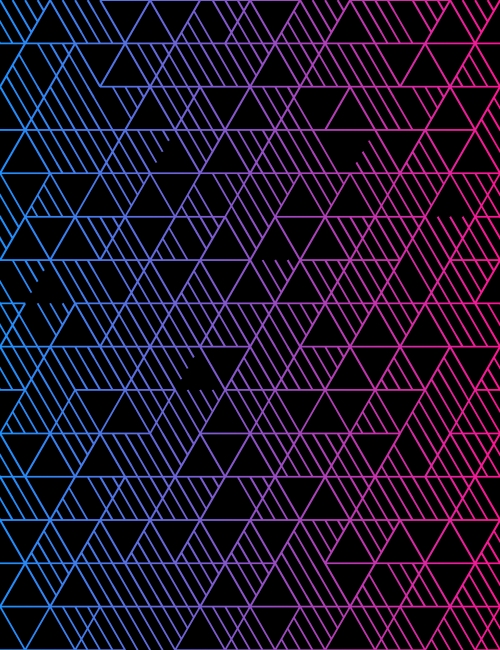
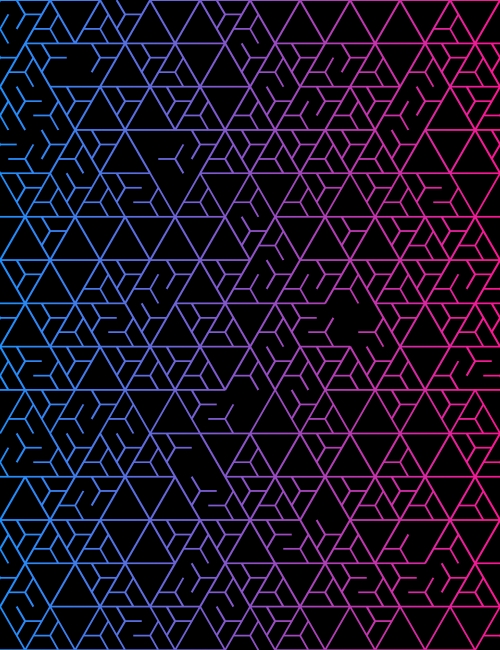
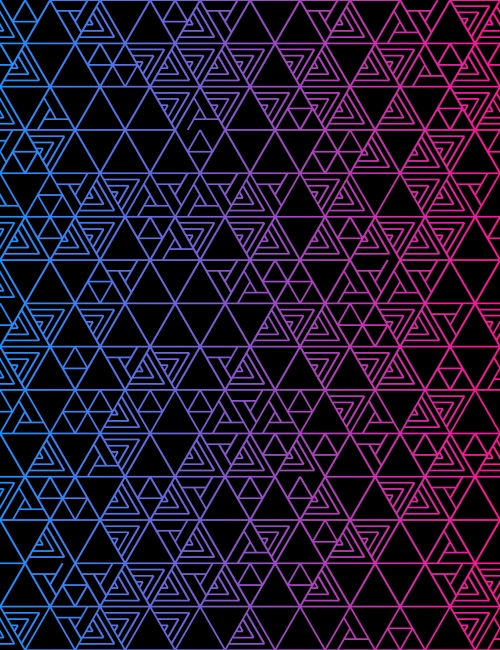
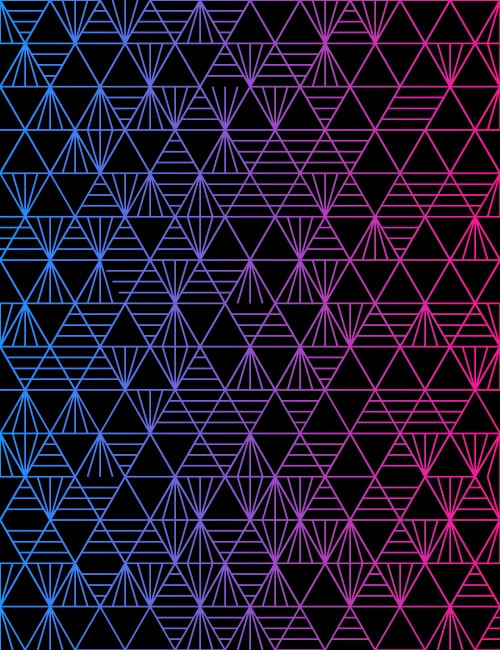
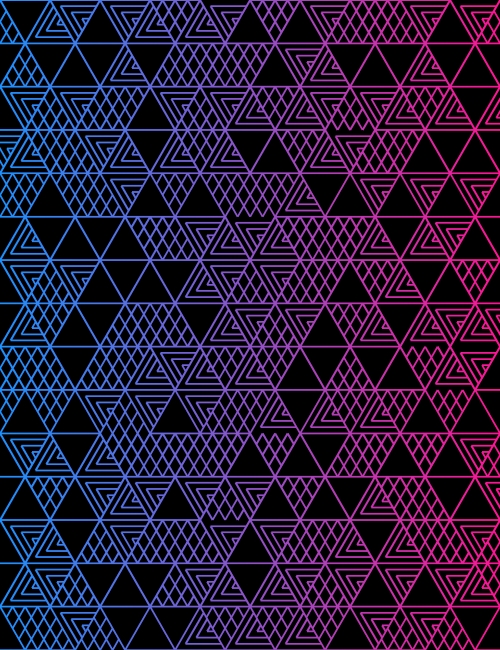
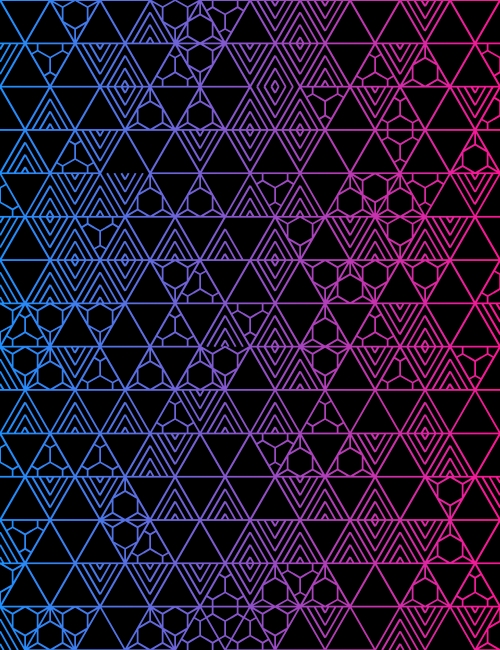
My latest experiment introduces “jitter” into the triangle vertex points.
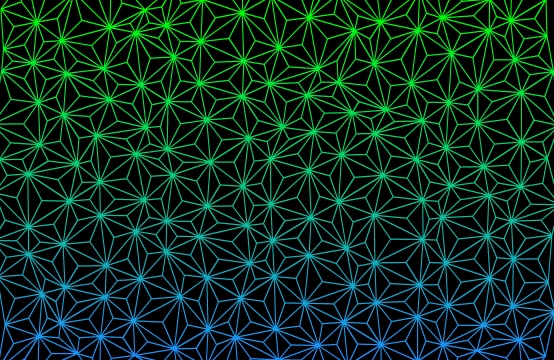
To satisfy my original idea, I did eventually design a way to create images without requiring a random selection. I was also able to approximately replicate my original drawing, and now it is pretty easy to make new images very quickly.
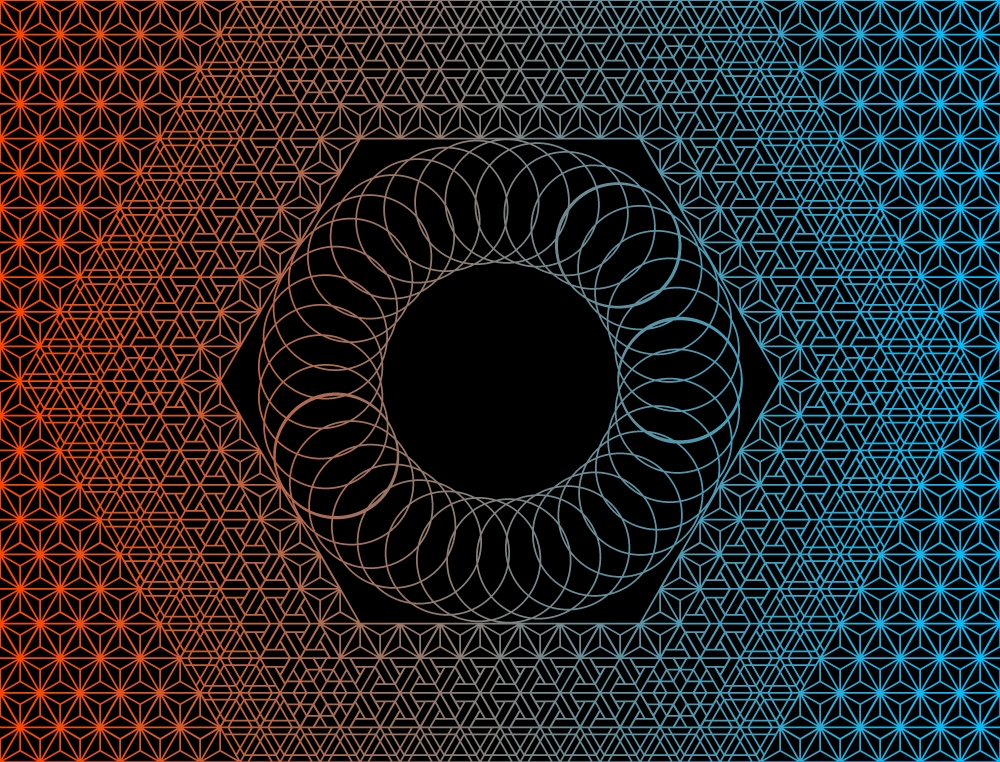
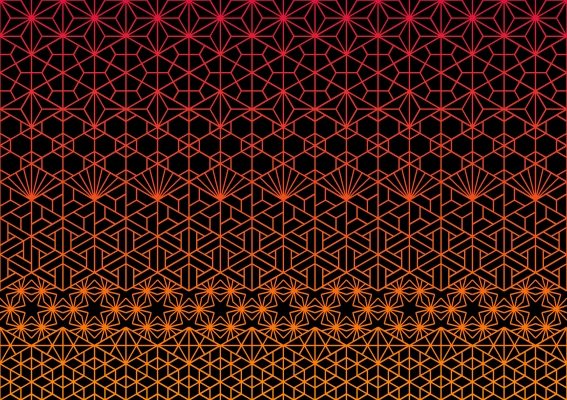
I plan to continue to work on new ways to make generative images, but I would also like to combine the generative aspect with the structured approach. Ideally, I’d like to have control over sections of the image, while still allowing for some surprises to be introduced.
Some of the other ideas I have include:
- animation
- overlaying multiple patterns
- implementing an anti-aliasing function for cleaner lines
- trying to make more complex images with curves
- generative backgrounds (currently, I just use color gradients)
- expanding into other kinds of generative art
- and lots more
Lastly, this is a great mini-documentary on one of the world’s most impressive kumiko studios, which was the inspiration for all of this: